A Tenzro node is software. It runs on a machine you already own and host, it holds its own keys in that machine's hardware, and it decides for itself what to serve. This post describes what that means in practice for a person with a home computer, a mini PC, a small server or a single-board computer: what the node does, what the documentation says it needs, and what is not yet measured.
What a node is
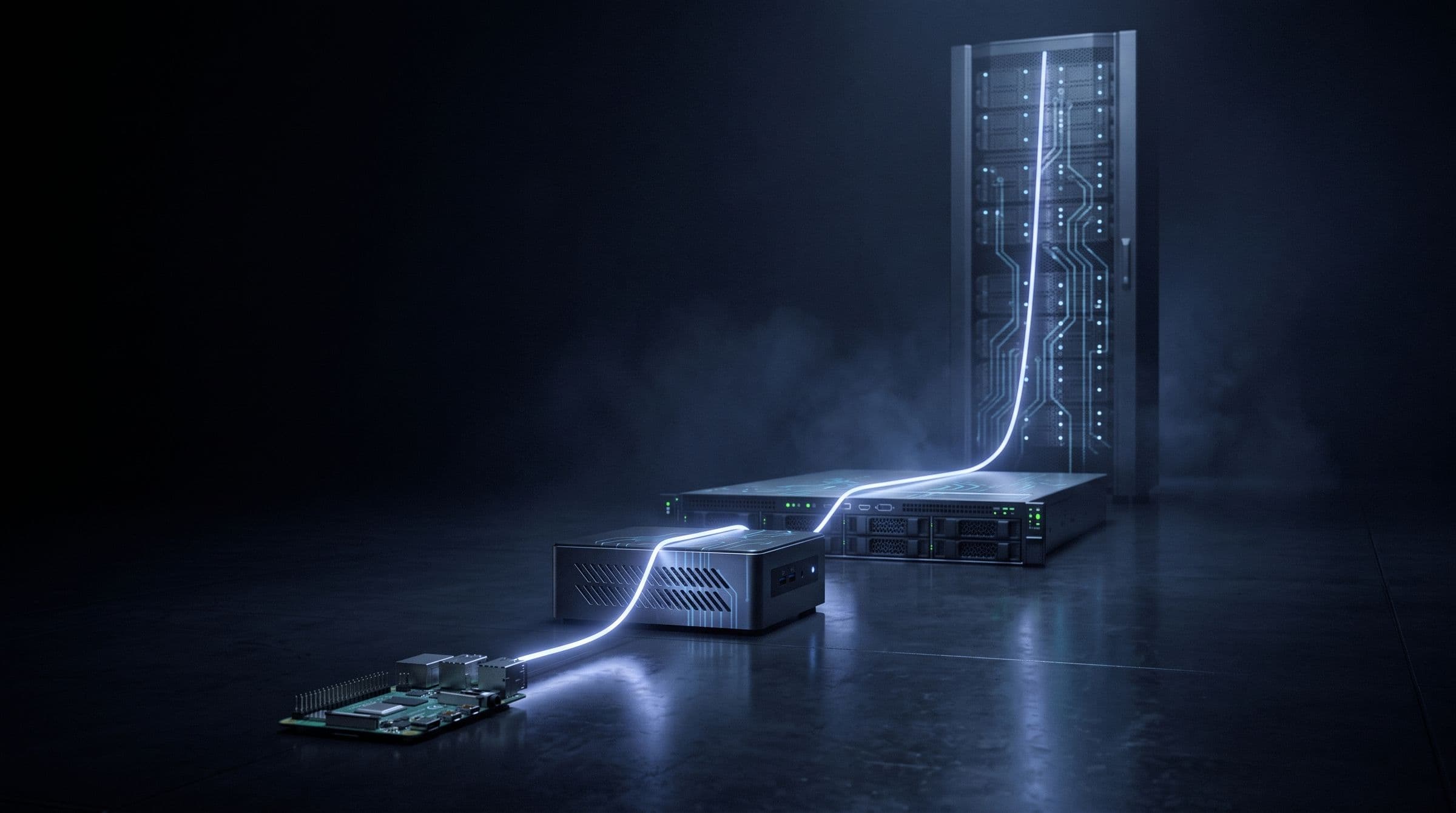
The same binary runs every role, and a node takes only the roles its hardware can serve. The documented roles include a light node that follows the network, a model provider, a compute provider, a storage provider, a validator, a TEE provider, an RPC provider and an edge relay. See Operators and roles.
The smallest useful node is the light node. It follows the chain, checks what it receives against finality certificates, makes payments, runs agents and storage, and forwards inference calls to providers. It needs no GPU and no stake, and it refuses the ai, compute and tee roles. See Run a light node.
A node that serves models is a provider. A machine with a GPU, or a CPU server with enough memory, can serve models, and the node reads the machine's memory and accelerators and decides what fits. By default it holds back 16 GiB for the operating system and its own services, lends always-resident models up to 60% of what remains, and loads image and video pipelines per job. The CPU build serves models of 6 GiB of weights or less and refuses a larger one by name. See Supported hardware.
What it needs
From the documentation, not from a benchmark:
- A supported operating system and build. Release archives exist for Linux x86_64 and aarch64, Windows x86_64 and macOS on Apple silicon and Intel. The Linux archives need glibc 2.39 or newer. Take the CPU build unless the machine serves GPU-tier models. Which archives have passed an install gate, and which classes are untested, is listed on the Supported hardware page. That page states that Raspberry Pi and other TPM-less boards are untested on hardware, and so are laptops.
- A hardware key. A node cannot start without one. There is no software-key mode.
- Network access. Outbound UDP 9001 and outbound TCP 443. The node asks for no inbound port, and direct reachability is optional.
- Bonds for provider roles. A light node needs no stake. Provider roles are bonded, and the amounts are governed parameters that the network reports. See Join the network as a provider.
Check a machine before installing with tenzro-node hardware, which prints what the binary was built for, the GPUs it can drive and whether the node would start there.
What it costs to run
There is no measured figure to give. The project has not published measured running costs for any device, and this post does not estimate them.
What can be said with a citation is the power rating of a module. NVIDIA lists the Jetson Orin Nano with power options between 7 W and 25 W. A device draws its own rated power and needs no new building, cooling plant or grid connection beyond the place it already sits in. That is a statement about a device, not a comparison: smaller devices run smaller workloads, and data-centre hardware is often more efficient per operation. How much energy a machine uses over a month depends on how much of the time it is serving work.
Operators still follow their own local power, network, tax and business rules.
Keys in your hardware
On Linux and Windows the node's keys live in the machine's TPM 2.0, provisioned once with tenzro-node tpm provision. On a Mac they live in the Secure Enclave. Signing keys are derived on demand, used in memory and wiped. The post-quantum key that pairs with each classical one is derived from the same hardware root when needed. See Hardware-rooted keys.
A machine with no TPM, such as a Raspberry Pi, does not hold its own key. It delegates to another machine's TPM through a key holder that you approve with a passkey. That means identity for a small board depends on a TPM machine on your network. A passkey authorises the operator and grants the key holder; it never holds a node consensus key.
Who can use your node
Visibility is set per model. --public announces the model so anyone can use it at your price, --gated announces it as access-required for callers your access policy names, and --private is neither announced nor served to anyone but you, over a direct or LAN connection. A private model is never announced or served off the node. See Model serving.
What is not claimed
- No measured power draw, cost to run, throughput or latency is published for any device.
- The Pi tier is designed for orchestration and light participation. That a light Pi build joins the network and is paid has not been measured, and this post does not say it does.
- Payment follows paid, verified use. Nothing is paid for running a node or for being listed, and whether a machine is used depends on demand and on what it can do.
Where to go next
Verify your download as described in Verify your download, then follow Run a light node or Join the network as a provider. For how work reaches providers, read How Tenzro distributes compute.
Where this fits
Tenzro is an economy for distributed compute and decentralized AI, open to machines of every size, from home nodes to data centers. It works alongside centralized data centers, which remain supply and customers of the same rails. A home node is one tier of that, with one identity model and one payment rail across every tier.